
A watch can be beautifully made and still be the wrong companion for your week. If you want to pick it up, set off and think about something else, a light-powered quartz watch is the more straightforward starting point. If winding, setting and observing a small mechanical machine is part of the attraction, an automatic offers a different pleasure.
Neither choice makes someone a more serious watch owner. The useful question is how much involvement you want between looking at the dial and leaving the house. This is a researched ownership guide, rather than a claim that we have worn or tested every watch discussed.
What solar and automatic actually mean
Citizen’s Eco-Drive system converts light into energy stored in a rechargeable cell. It can use artificial light as well as daylight. That makes “solar” convenient shorthand, although direct sunshine is not the only way to keep it running. It is still an electronic watch with an energy-storage component. Citizen’s Eco-Drive explanation.
An automatic is a mechanical watch. A moving weight winds its mainspring as your arm moves; the spring supplies the energy that runs the movement. Being automatic does not mean it stays wound indefinitely while sitting in a drawer. Citizen’s explanation of automatic operation.
Swipe or scroll the table sideways to compare every column.
| Ownership question | Light-powered quartz | Automatic mechanical |
|---|---|---|
| Where does energy come from? | Light, stored in a rechargeable cell | A wound mainspring |
| What routine does it need? | Suitable light exposure | Sufficient wear or winding |
| What happens when left unworn? | Depends on charge and the model’s reserve | Stops when its reserve is exhausted |
| What is the attraction? | Convenience and uncomplicated timekeeping | Mechanical construction and interaction |
| Is it maintenance-free? | No | No |
The easier everyday choice
For an office watch that rotates with other accessories, light-powered quartz has a compelling practical case. You do not need to match your arm movement to a winding requirement, and there is no mechanical winding ritual before a quiet desk day.
Storage still matters. A watch kept under a sleeve and then put into a closed box is receiving less useful light than one exposed regularly. Charging times depend on the model and light source; a few minutes near a lamp should not be treated as a full recharge. Citizen’s care guidance gives markedly different charging times for different light conditions. Follow the instructions for the actual movement rather than transferring one watch’s table to another. Citizen charging guidance.
Keep the watch away from excessive heat when charging. The objective is suitable light exposure, not a hot dashboard experiment. If a watch has stopped after long dark storage, consult its charging and reset procedure before assuming something is broken.
Why an automatic can still be worth the effort
The extra involvement is often the reason to buy one. Setting a watch, seeing a movement through a display back and knowing that a spring powers the hands can be enjoyable in a way a specification comparison does not capture.
The Citizen TSUYOSA NJ0150-56Z is a concrete example: its published specifications identify an automatic 8210 movement. Once its stored energy runs out, it will need winding and setting again. This is a distinction in how the movement works, not a measured result from our own sample. Citizen TSUYOSA specifications.
Consider whether you like that task before buying a collection of automatics. A watch winder is another purchase and another object to accommodate. It is sensible to learn whether ordinary winding and setting bother you before treating an accessory as essential.
Accuracy is a model question
Do not assume that a higher price guarantees a more convenient timekeeping routine. Read the stated accuracy for the movement and decide what deviation you would actually notice.
Mechanical behavior can vary with winding state, position, temperature, magnetism and shock. Citizen explains those variables in its mechanical-watch guidance. A small daily difference can accumulate, so someone who expects the display to match a phone continually should make accuracy part of the buying decision. Citizen mechanical accuracy guidance.
Avoid borrowing the specification of a premium movement for an affordable model from the same brand. Likewise, light-powered does not automatically mean radio-controlled or satellite-synchronized; those are separate features.
What ownership really costs
Compare purchase price with the likely service arrangement, seller warranty, strap replacement and the inconvenience of sending a watch away. A modestly priced automatic can still involve a meaningful repair decision later. A light-powered watch can still need seals, exterior components or technical assessment.
Citizen distinguishes rechargeable cells from disposable batteries and warns that opening a case can affect cleanliness and water resistance. The practical lesson is to use the appropriate service route rather than treating an Eco-Drive like a disposable-cell watch. Citizen cell and battery guidance.
Before ordering, ask who provides the warranty and whether the seller is authorized. A brand warranty and a marketplace seller’s warranty can represent different service paths. Keep the reference number, receipt and warranty terms with your purchase record.
Two watches that explain the choice
The Citizen BM8180-03E offers a useful light-powered reference point: a 37mm case, green nylon strap, day/date display and published 100-meter water-resistance rating. Its field-watch styling makes the ownership argument easy to understand: legibility, modest dimensions and a light-powered movement. Citizen BM8180-03E specifications.
The TSUYOSA illustrates the more jewelry-like automatic route with a steel bracelet and a larger case. They are different styles as well as different movements. Try to separate your preference for a dial, bracelet or color from your preference for how the watch is powered.
Choose light-powered quartz if regular readiness is the priority. Choose automatic if the mechanism itself contributes to your enjoyment and you accept the routine. The best purchase is the one whose small demands still feel reasonable after the novelty wears off.
Explore the options
Exact product examples for the choices discussed in this guide. Confirm the selected variant, current seller and return terms before ordering.
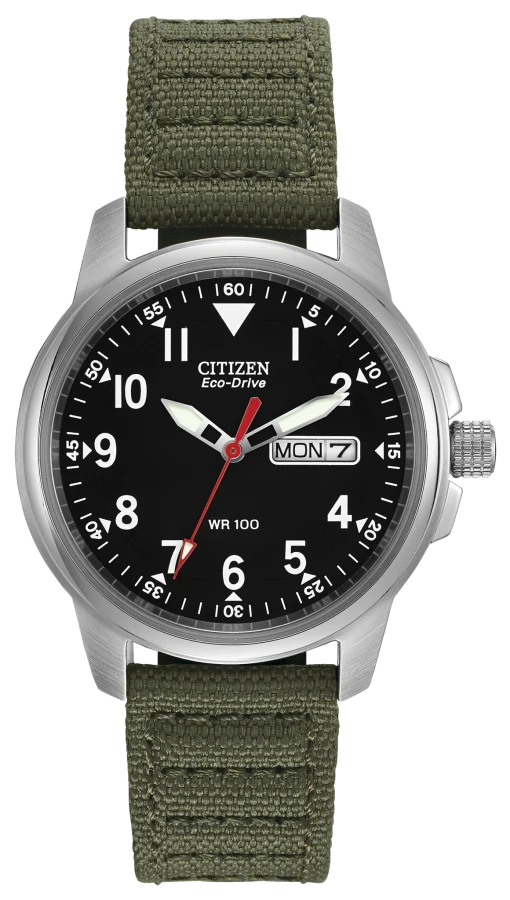
Citizen Eco-Drive Garrison BM8180-03E
A compact light-powered field watch to compare for everyday readiness.
As an Amazon Associate I earn from qualifying purchases. We may earn a commission from qualifying purchases through this button.
View exact product on Amazon ↗ (paid link)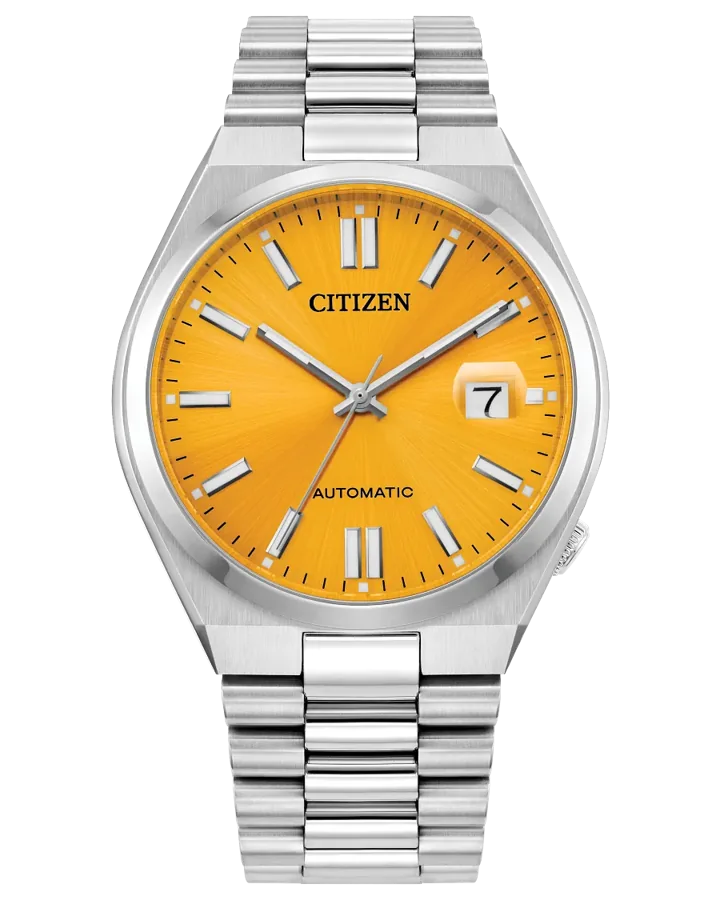
Citizen TSUYOSA NJ0150-56Z
A bracelet-focused automatic illustrating a more involved ownership routine.
As an Amazon Associate I earn from qualifying purchases. We may earn a commission from qualifying purchases through this button.
View exact product on Amazon ↗ (paid link)