
A GMT watch earns its place by answering a small, useful question: what time is it somewhere else? The extra hand can keep home in view when you travel, or tell you whether a colleague overseas is likely to be at their desk. But two watches with four hands can behave differently when you pull the crown.
The useful buying distinction is which hour hand adjusts independently. A caller GMT lets you move the 24-hour hand separately. A flyer, or traveler GMT, lets you jump the ordinary local hour hand while leaving the reference time in place. Choose around the adjustment you will actually make most often. This is a guide to the mechanisms and published specifications; we have not tested these watches.
The fourth hand reads a different scale
The ordinary hour hand makes two trips around a conventional dial each day. A GMT hand makes one. Read that hand against the watch’s 24-hour markings: 06 means six in the morning, while 18 means six in the evening. The minute hand supplies the minutes for both zones when they share the same minute offset.
A 24-hour hand does not have to show Greenwich time. You can use it for home, a second office or another reference zone, within the watch’s adjustment limits. GMT is the familiar watchmaking term for the function. It does not imply that the watch receives a radio signal, connects to a phone or knows your destination.
Caller GMT: useful when another place moves around your day
In a caller GMT, the independently adjustable hand is the 24-hour hand. Keep the ordinary hands on your local time, then set the extra hand to the place you want to follow. It suits someone who stays in one location while working with people elsewhere.
Seiko’s 4R34 is a clear example. Its official operating instructions distinguish the first crown position for the date and 24-hour hand from the second position for time setting. It does not provide a separately jumping local hour hand. That is the distinction to check when a retailer uses broad language such as travel GMT.
You can still take a caller GMT on a flight. Changing the main hands to your destination simply takes a different setting sequence, because the main time-setting operation also affects the GMT indication. Follow the exact manual and recheck both displays afterward. Caller describes a convenience tradeoff, not a restriction on where you can wear it.
Flyer GMT: useful when you change your own time zone
A flyer GMT reverses the convenient adjustment. The ordinary hour hand jumps independently, so you can change the local hour without resetting the reference hour and minutes. Leave the 24-hour hand on home time and move the local hand when you arrive.
MIYOTA’s 9075 movement specification identifies individual hour-hand adjustment. Its setting manual explains setting the 24-hour and minute hands to home time, then adjusting the local hour hand and date. This is the functional reason travelers seek that mechanism.
Watch the date as well as the hour. Crossing midnight in the local display affects the local calendar, and each caliber has its own instructions for date correction. Learn the procedure before a trip, rather than experimenting with an unfamiliar crown at the airport.
Two examples, two different kinds of watch
The Seiko 5 Sports SSK003 illustrates the caller approach in a blue-dial sports design. Seiko specifies a 4R34 automatic movement, approximately 41 hours of reserve, a 42.5mm case, 46mm lug-to-lug length and 13.6mm thickness. Its rotating 24-hour bezel offers a second scale to work with. The substantial case and bracelet deserve as much attention as the extra hand.
The Bulova Wilton GMT 96B385 takes the flyer approach with the 9075. Bulova lists a 43mm case, blue dial, black leather strap, domed sapphire crystal and approximately 42 hours of reserve. It is a dressier interpretation, with a fixed 24-hour ring rather than the Seiko’s rotating bezel. These are mechanism examples, not a controlled performance comparison or a ranking.
Do not assume that either will fit because the diameter seems familiar. Thickness, lug shape, strap adjustment and the visible dial all affect how a watch wears. Our small-wrist guide explains the measurements to compare with a watch you already find comfortable.
A bezel can help, but it does not automate the arithmetic
A rotating 24-hour bezel shifts the scale against which you read the GMT hand. That can let you consult another offset without moving the hands, provided you understand which scale represents which zone. A fixed ring is simpler to leave alone; a rotating one is more flexible to manipulate.
Neither corrects daylight-saving changes for you. Two places may change clocks on different dates, so a familiar difference is not permanent. Check the actual local times before setting the watch or scheduling a call.
Half-hour and quarter-hour zones need particular care. These mechanical examples use a shared minute indication and hour-step adjustments for their convenient GMT setting. They are not universal independent minute-offset displays. If your regular route includes a fractional-hour difference, verify exactly how the watch can represent it; a digital world-time watch or a phone may be more useful.
Which mechanism should you buy?
Swipe or scroll the table sideways to compare every column.
| Your usual situation | Adjustment worth prioritizing | What to verify |
|---|---|---|
| You stay home and follow another office | Independent 24-hour hand | Caller setting procedure and legibility |
| You frequently arrive in a new whole-hour zone | Independent local hour hand | Flyer movement and local-date procedure |
| You visit fractional-hour zones | Appropriate minute-offset support | Exact manual, rather than the GMT label |
| You mostly like the design | Fit and everyday readability | Whether the extra display stays useful |
The best GMT for you is the one whose extra hand remains understandable after the novelty wears off. Decide what it will show, read the setting instructions, then choose a case and dial you want to wear. When ordering, match the complete reference, selected color and seller’s terms. A correct mechanism description cannot compensate for receiving a different watch.
Explore the options
Product examples discussed in this guide. Confirm the exact variant, selected seller and current terms before ordering.
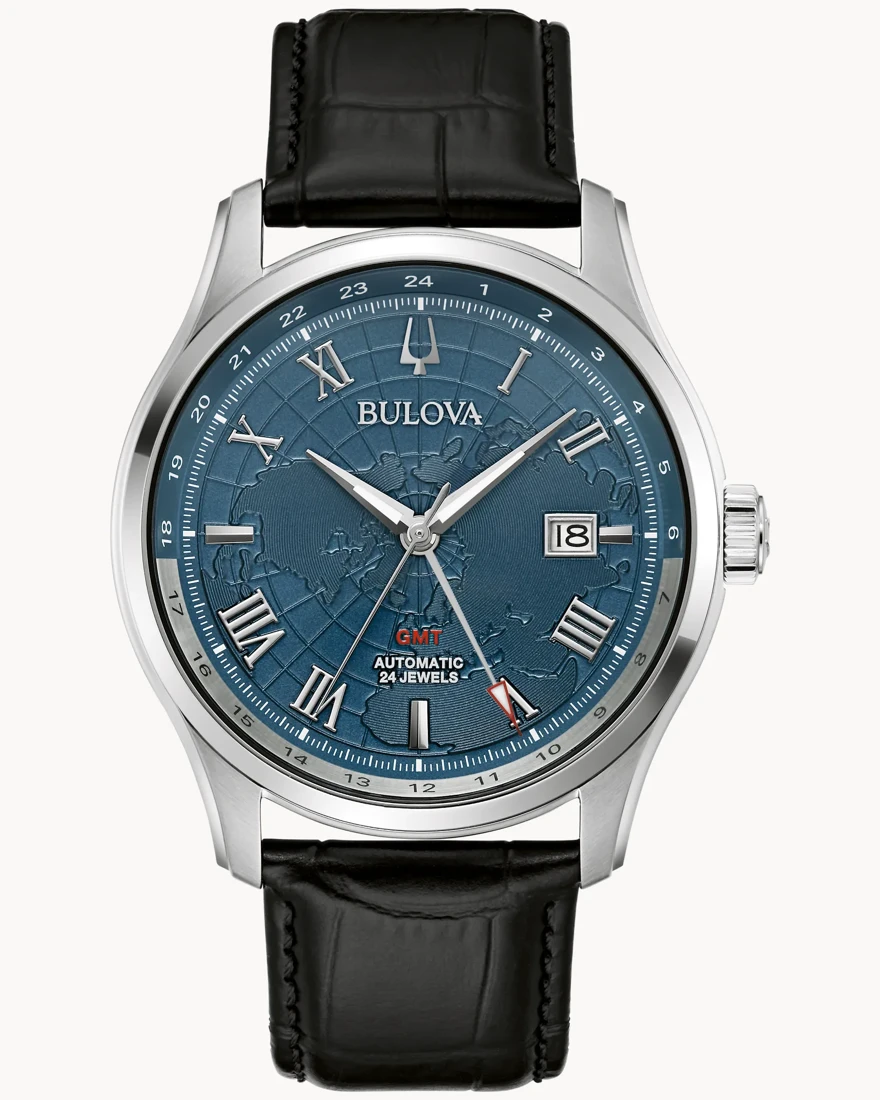
Bulova Wilton GMT — 96B385
A flyer-GMT example with an independently adjustable local hour hand.
As an Amazon Associate I earn from qualifying purchases. We may earn a commission from qualifying purchases through this button.
View exact product on Amazon ↗ (paid link)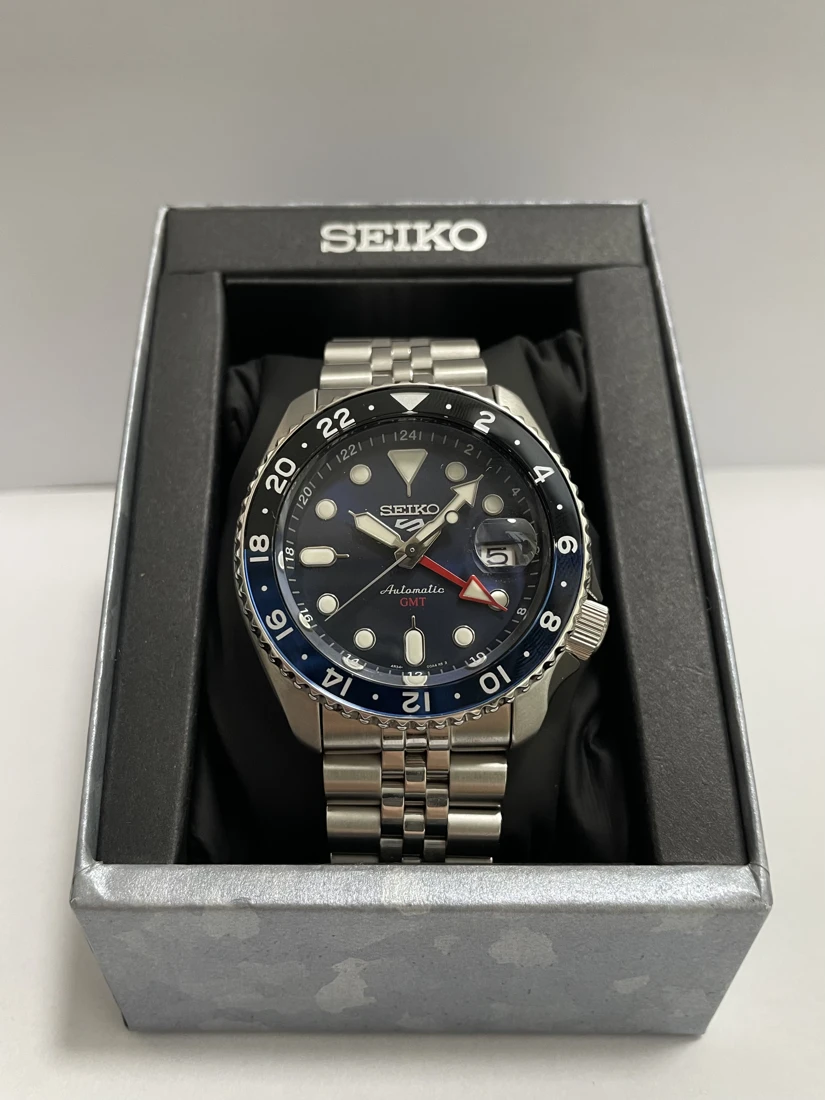

Seiko 5 Sports SSK003 — caller GMT
Official specifications for the blue-dial 4R34 caller example. This ordinary manufacturer link avoids an Amazon variant mismatch found during research.
Visit Seiko 5 Sports SSK003 — caller GMT ↗