
Counter space is a limited resource. Every appliance competes with the space required to prepare food, wash up, and put things down. The most useful kitchen gadget therefore earns two approvals: it improves a recurring task, and it remains worth accommodating after the novelty fades.
Four categories deserve different buying questions: brewing machines, gooseneck kettles, long-slot toasters and automatic stirrers. Fellow's Stagg EKG provides an independently researched example of the precision-kettle approach.
This is an editorial buying guide, not a cooking test. Compare the exact version and current seller terms before ordering.
A brew maker should fit your preferred cup
Start by choosing the brewing method. An espresso machine, filter brewer and immersion system ask different things of their owner, from ingredient preparation to cleanup. Decide which process you enjoy before comparing features.
For a useful evaluation, describe the drink and the person making it. How many servings? How often? What preparation is expected? Is adjustment welcome, or does the owner want a consistent button press?
Then inspect the removable parts, cleaning instructions, consumables, and service support. A machine can make an enjoyable cup while still being a poor fit for someone who dislikes its daily maintenance.
The precision-kettle proposition
Fellow's Stagg EKG family illustrates the appeal of a gooseneck kettle: a shaped pour spout and adjustable temperature controls. Current product materials also describe scheduling and hold options on the listed models. [1]
Those features matter most when you intend to use them. Someone who enjoys a deliberate brewing routine may value control; someone primarily filling a large pot may prefer a different design. There is no reason to turn a specialist tool into a universal kitchen recommendation.
The exact version matters, too. Confirm the capacity, voltage, controls, and included accessories on the selected listing. Fellow notes that its updater app does not remotely control the kettle's settings. [1] A Wi-Fi reference should not be expanded into an unsupported promise of phone-operated brewing.
Long slots need a bread test
A toaster's useful capacity is the bread it accommodates, not simply the number printed beside the controls. Before choosing a long-slot toaster, measure the pieces you actually eat and compare them with the manufacturer's slot dimensions.
A direct review should report repeat batches, small and large slices, access after toasting, and crumb cleanup. Appearance is easy to judge from a photograph; consistency requires actual food and repeated use.
Automatic stirring is a narrowly defined job
An auto stirrer is an appealing idea when it addresses a task you find repetitive. Before judging it, establish what the exact manufacturer permits: vessel shape, ingredients, temperature, duration, and supervision.
We would not equate movement in a demonstration with a promise that any recipe can be left unattended. The practical trial is whether the device handles one permitted dish well and is easier to clean than the work it replaces.
It is also worth asking whether the tool simplifies the recipe or introduces another object to assemble, charge, and wash. That answer will differ between an occasional user and someone with the same repetitive cooking task every day.
Our buying judgment
Start with the food or drink you make repeatedly. Choose one improvement you can describe: controlled pouring, suitable bread capacity, a more convenient brew, or assistance with a specific stirring job. The best kitchen technology earns its place through repeated use, then leaves the rest of the counter available for cooking.
Source
The product edit
A researched product example selected for the buying questions above. Confirm the exact configuration and your requirements before purchasing; we have not performed a hands-on test.
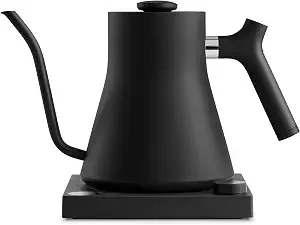
Fellow Stagg EKG, Matte Black, original model
Add controlled pouring and adjustable kettle temperature.
View exact product on Amazon ↗ (paid link)